- Irish mashed potato pie for Π Day and Saint Patrick’s Day—Wednesday, March 11th, 2026
-
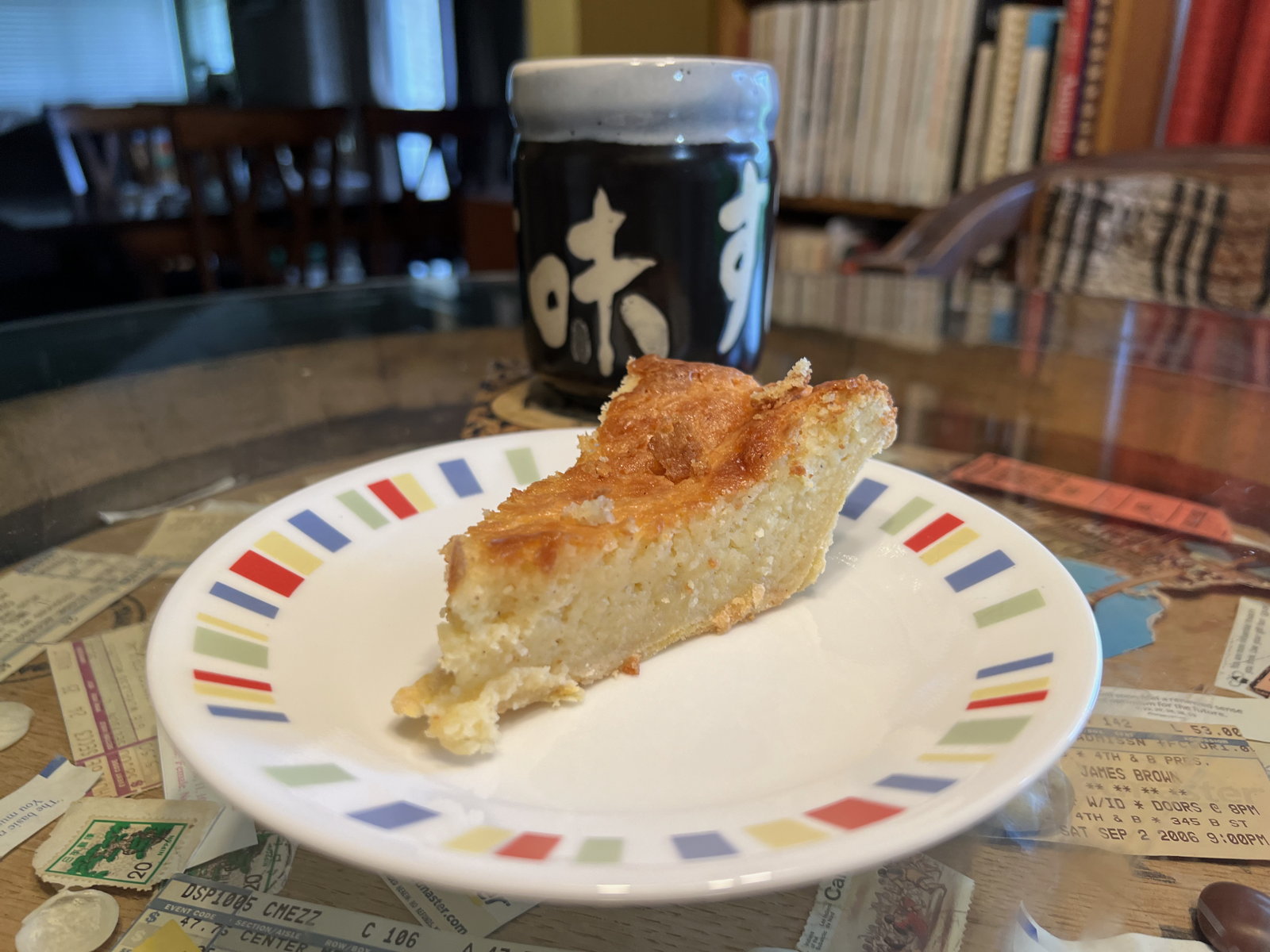
A wonderful pie from white potatoes instead of sweet potatoes.
Pi Day is this coming Saturday.
A few days after it, on Tuesday, is St. Patrick’s Day.
This year’s Independence Day will be the 250th anniversary of the signing of the Declaration of Independence.
So why not a pie this year celebrating all three of those? I found this pie in a Horsford Baking Powder cookbook that celebrated its product’s Centennial Award from the Centennial Exhibition in Philadelphia in 1876. That’s right: this pie was in a cookbook that took part in the centennial of the signing of the Declaration of Independence. The book itself probably didn’t come out in 1876, though it may have—the exhibition started in May of that year, leaving lots of time for a company that published as many iterations as Rumford did to add that award to their products. But I’m guessing 1877, for reasons I go into more detail about in my 2024 lead-up to the sestercentennial.
It’s a fascinating pie and one that appears to have fallen out of favor in favor of the sweet potato pie. This is a much lighter pie than sweet potato, and it allows the spices to shine. But it still exhibits some of the flavor of potato, and, to my mind, to great effect. But I come from a long line of potato aficionados.
I considered saving this recipe for National Potato Day, one of the other handful of food days I enjoy. But that’s in August, after Independence Day, so, given that this is the 250th anniversary of the signing of the Declaration of Independence, I decided to put it here.
Here’s the full recipe as it appears in the Rumford Chemical Works cookbook:
Irish Potato Pie.—One pound mashed potato, rubbed through a cullender, one-half pound butter creamed with the sugar, six eggs, whites and yolks beaten separately, one lemon squeezed into the potato while hot, one teaspoonful nutmeg, one teaspoonful mace, two cups white sugar. Mix and bake same as Sweet Potato Pie.
The “Sweet Potato Pie” appears directly above:
- The New Colossus Breathes Free—Wednesday, March 4th, 2026
-
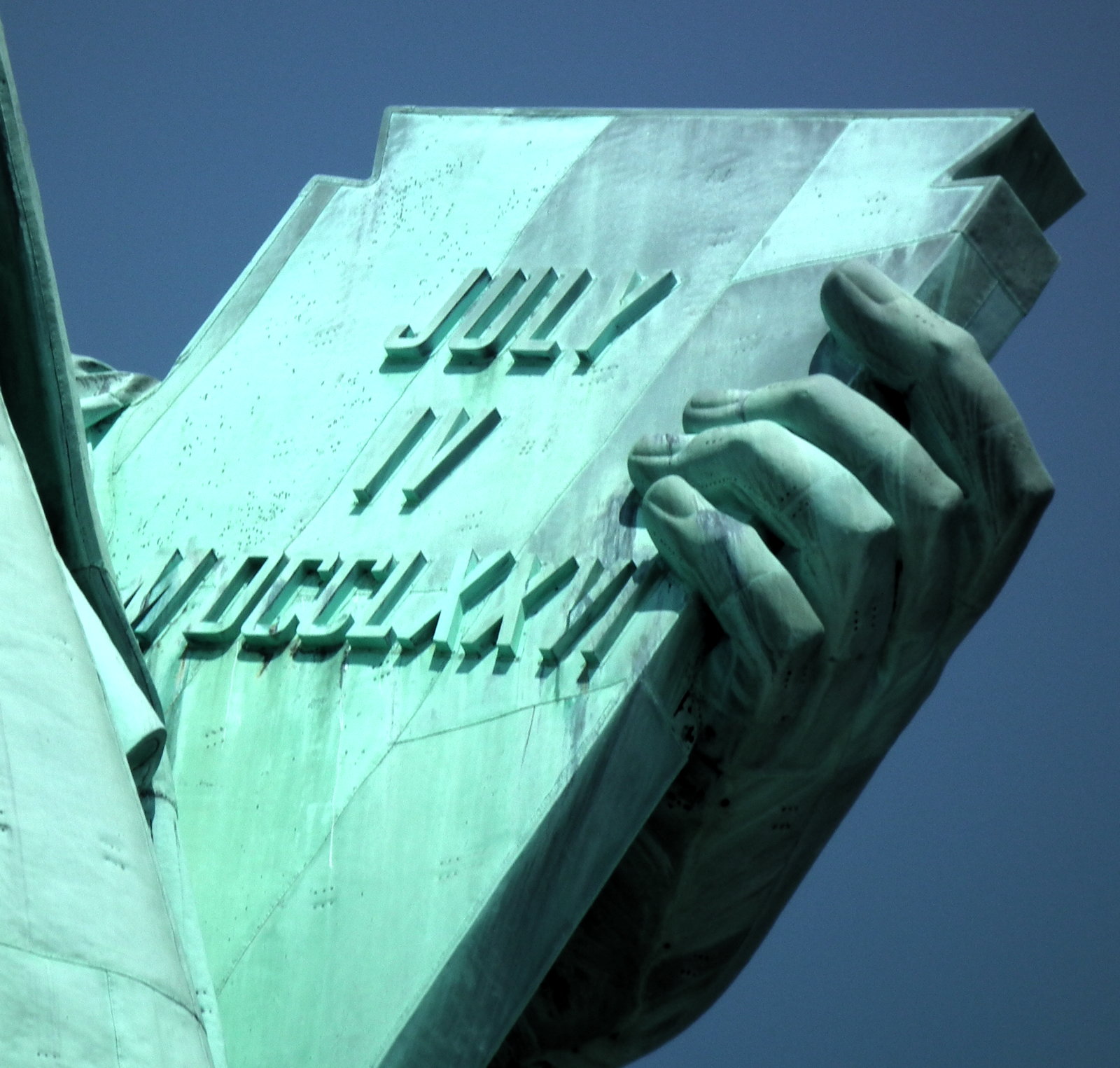
Independence Day. (Erik Drost, CC-BY 2.0)
On March 13, 1881, Tsar Alexander II, Emperor of Russia, was assassinated in Saint Petersburg by literal bomb-throwing anarchists. This led to one of the most enduring and universal symbols of Independence Day and American freedom, known throughout the world. She holds not just the torch of freedom but a tablet inscribed with “July IV MDCCLXXVI”, celebrating the American revolution. She is synonymous with the United States and with freedom.
If you want to say “America” in a visual medium, you show Lady Liberty. If you want to say “America has fallen”, you show Lady Liberty fallen. The Statue of Liberty has been featured in countless movies, from Planet of the Apes to Superman to Cloverfield. I’m pretty sure every Marvel superhero from the sixties and seventies has flown, swung, or walked by her at least once. In DC Comics she even granted superpowers to the World War II era hero Miss America.1 I first ran across Miss America in the pages of the wonderful Martin Pasko/Gerry Conway/Bob Rozakis comic Freedom Fighters, initially published during the Bicentennial celebrations of 1976.
Marvel Comics had their own Miss America, in Roy Thomas’s wonderful The Invaders, also published in the runup to and during 1976.
- Using ingredients to guess cookbook years—Wednesday, February 25th, 2026
-
The first reference to “homemade” granola in my collection.
Many recipes in community cookbooks call for ingredients by company and brand name. Eagle Brand Condensed Milk, for example, and Pet Evaporated Milk are very common ingredients. Not only are those names used in a generic manner—you’ll often see condensed milk called Eagle Milk and evaporated milk called Pet Milk, despite both companies producing the other product—a product name obviously won’t be used before the product was introduced to the market.
A brand name isn’t likely to be used in an ingredient list unless that one brand is the only such ingredient on the market, or it has had time to become the semi-generic term for the ingredient. Product debuts can thus provide a lower bound for the year of publication when a recipe calls for such a product.
Jell-O is a very good example of a brand name that has become a generic name or nearly so for the ingredient. A recipe after Jell-O’s rise in popularity is as likely to call for “jello” as it is to call for “gelatin”, especially if the gelatin called for is a flavored gelatin.
Sometimes, the way an ingredient is referred to can provide a hint to the age of the cookbook. In Favorite Recipes Prepared by Fremont Nursery, Inc. there is a great recipe for “Homemade granola” from Joy Dykman. Why would it be called “homemade” granola? One likely reason is that the first mass-market granola came out in 1972, and the recipe’s title contrasts itself with commercial granola. That narrows the range for the cookbook’s publication considerably. It almost certainly came out after 1972. While I can find granola recipes in cookbooks before 1972, none that I’ve seen call themselves “homemade”. Homemade was the only kind of granola before 1972 and didn’t need to be noted.
Here’s a list of products commonly found in community cookbooks, and their debuts under that name. This list is mainly ones that I’ve used or tried to use to help date cookbooks in my collection:
- Hot ovens: Bakers were once the slaves of time—Wednesday, February 18th, 2026
-
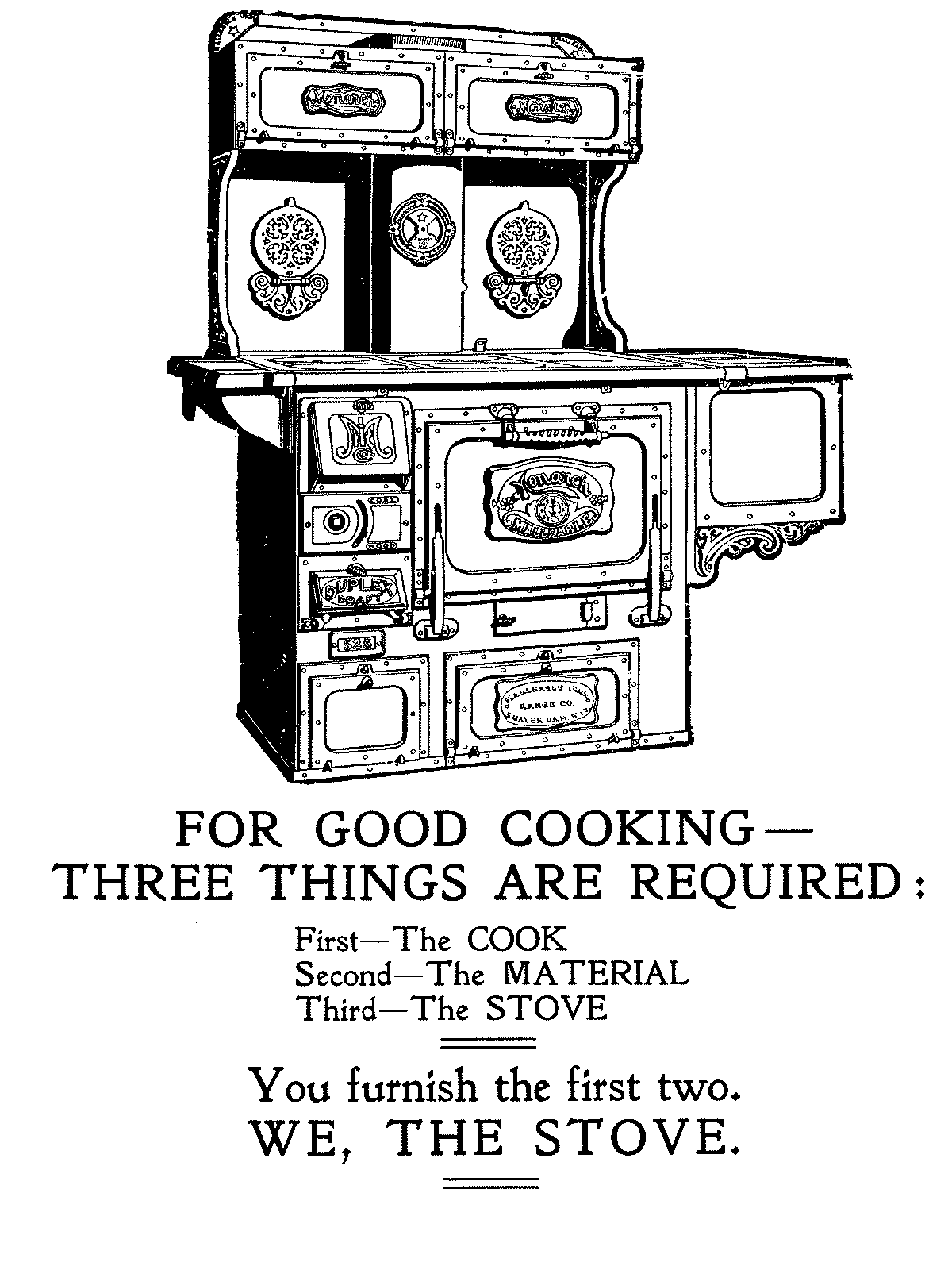
There are no set-and-forget dials and buttons on this state-of-the-art oven advertised in a 1916 Columbus, North Dakota, community cookbook.
I had an interesting sense of déjà vu watching Glen Powell of Glen and Friends use a 1914/1915 cake recipe recently. In my post about quiet ovens I wrote
The ability to trust a steady temperature in an oven isn’t just an improvement. It’s a paradigm shift. Their oven preparation process, and the terminology they used to describe it, was built around a process that simply doesn’t exist in modern kitchens.
Glen had trouble with a pre-self-regulating oven cake recipe in part because he treated his oven as a set-and-forget appliance—which, being a modern oven, it was—rather than a tool in a process, as the recipe assumed.
We have chained time in our kitchens. We have halted the decay of highly perishable foods and we have lashed baking to a schedule. We don’t have to worry about hot ovens and slack ovens and quick ovens and quiet ovens. We can literally set a temperature and a time and go do something else. And we increasingly forget that time once ruled us instead of us ruling time.
We can barely imagine the technology that inspired those old oven terms. So we make little charts corresponding oven terms to temperatures and shove our cakes into the darkness hoping for a correspondence.
Used as a rule of thumb, these charts make it possible to experiment with recipes from before modern kitchens. But when we forget that they are a rule of thumb, they instead make it more difficult to make recipes from books before the modern home refrigerator and oven. Glen’s burnt cake was a matter of running into this problem from multiple directions.
Glen recognizes that all those oven descriptor to temperature charts are inaccurate. In his 160-year-old Victorian pudding video, he said:
- A Contrived Example of Game Play—Wednesday, February 11th, 2026
-
When you’re procrastinating in units of years, you can get a lot not done. — Paul Graham (How to Do Great Work)
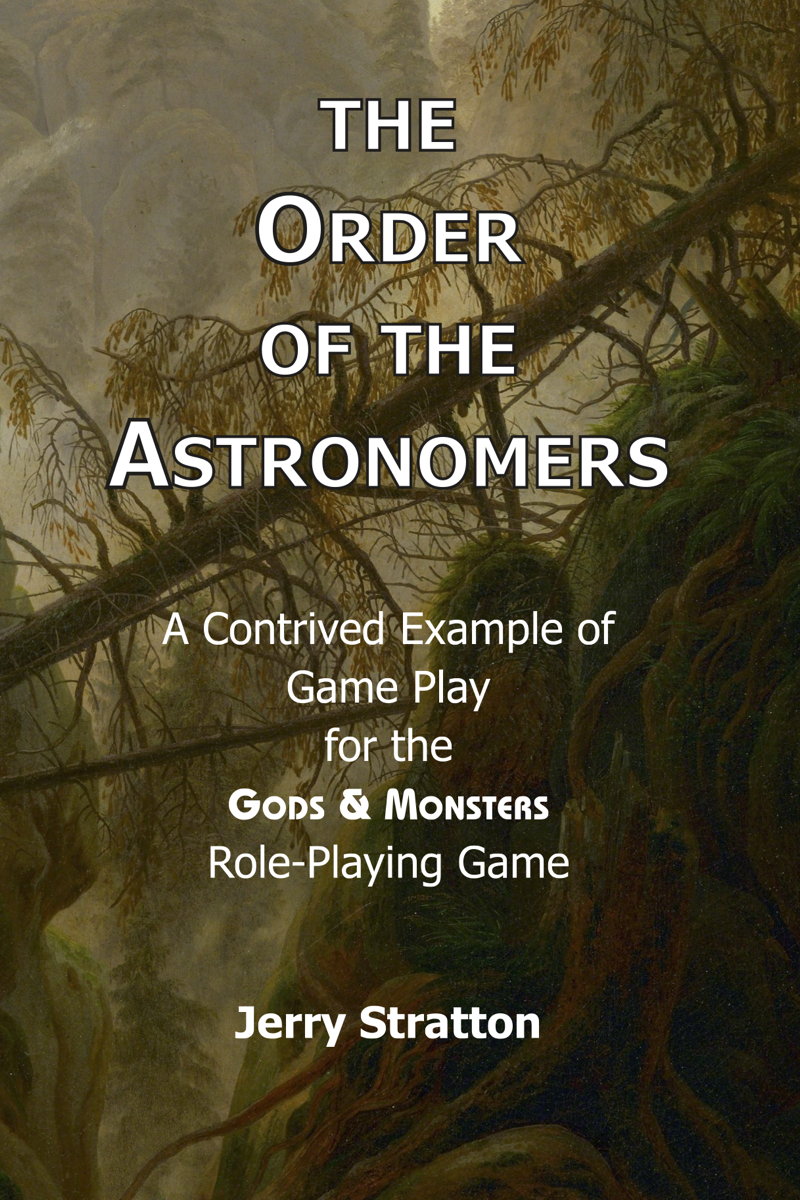
I’ve started work again on making sure all of my Gods & Monsters game books are available in print. The first new release is my “contrived example of game play”, The Order of the Astronomers. It’s a “story” that follows four of the example characters in the rulebook as they adventure through the introductory adventure, The Lost Castle of the Astronomers. The characters I chose for the fictional players to play are Charlotte Kordé (monk), Gralen Noslen (sorceror), Sam Stevens (thief/warrior), and Will Stratford (warrior).
The point of this book is that the characters make choices like players make choices. The world responds like an Adventure Guide would respond. Footnotes throughout the story explain the rules in play during that encounter or for that action.
The Order of the Astronomers, like all of the books I want to make available in print, has long been available as a free downloadable PDF and as a web page. Unlike the other books, however, it isn’t a rulebook. It’s an example of how the rules work. I wanted to do it first because I wanted to go through it and make sure the notes about the rules were correct. It is a basic introduction to the game. I refer directly to it in the introductory adventure:
- Midnight repost: Genocide is coming to America—Wednesday, February 4th, 2026
-
“The comparison between the tactics of the Nazi storm troopers and our modern Antifa thugs is apt. It illustrates the time we now live in… the same unwillingness of decent Germans to believe the Nazis were a threat is the same unwillingness of too many modern Americans to believe the same thing about Antifa and the Democratic Party. Worse, we now have a large minority of Americans who support this violent behavior. To them, violence is wholly justified against those who disagree with them.”
“As he told us this story, what struck me was how similar my own experience has been. Time after time for the past four decades my liberal friends and relatives have refused to believe anything I say to them—always based on actual events—about politics and the growing corruption and bigotry within the Democratic Party. Like those decent Germans in the 1930s, these decent Americans find reasons to quickly dismiss what I say, without making any effort to find out if there is any merit to it…
“What I said was simply too unbelievable to be true, even though I had actually experienced it.”
Robert Zimmerman: Midnight repost: Genocide is coming to America at Behind the Black (#)
- Dream of Poor Bazin audiobook—Wednesday, February 4th, 2026
-
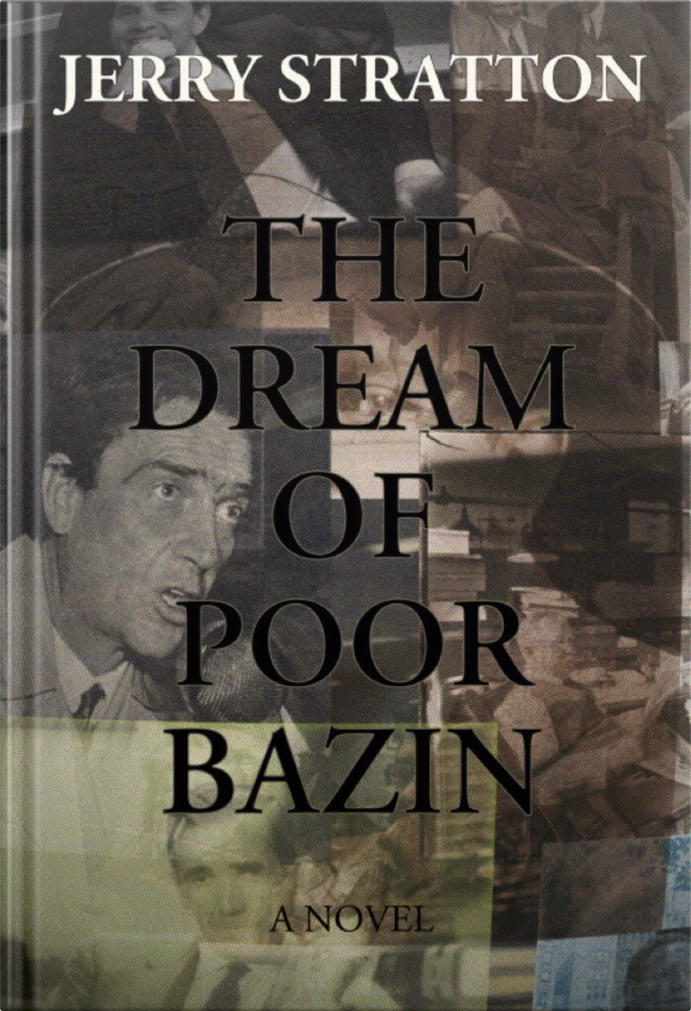
The Dream of Poor Bazin is now available as an audiobook on the Apple Bookstore. This is an experiment on my part, but also on Apple’s as near as I can tell. I had to do no more work than just approving the conversion; the reading was auto-generated by Apple using their artificial voice “Warren”, a “Baritone, American accent: Has characteristics typically associated with masculine voicing.”
Warren sounds like a typical pretentious but soft-spoken journalist of the NPR variety, albeit without the fake Brit accent. I’m not sure this voice would work nearly as well if The Dream of Poor Bazin weren’t a satire about pretentious journalists with delusions of public service.
I have not listened to the entire audiobook. I’ve only listened to the preview. Neither Apple nor Draft2Digital, who Apple is working with for this autogeneration experiment, have given me a free copy. I’m also afraid that if I listened to the book I’d want to re-edit the whole thing based on changes in journalism since I released the paperback in 2020.
I do not have time for that, and I also have a strong conviction that books are books of their time; re-editing them several years later can only diminish them. I can’t imagine re-editing It Isn’t Murder If They’re Yankees, and have put off republishing it for that reason. I immersed myself in a lot of folklore and Southern literature during the process of writing Yankees and I would not even begin to be qualified to edit it today. Even were I to try to replicate that immersion, it would be from a completely different perspective.
“Warren” is obviously a computer, but only barely so. It’s a little more deliberate than I’d like. It pauses at odd points and doesn’t treat commas as a human would, or at least as I would. That said, Warren is not at all robotic. It does a reasonable job of emphasis. It uses sotto voce mostly in the right places. It does not have quite the level of human understanding to know to emphasize “you are a Virginian” more strongly and “you are my son” more affectionately, but it does know that they need a different emphasis than the surrounding text. That alone is impressive.
- Using archives to guess cookbook years—Wednesday, January 28th, 2026
-
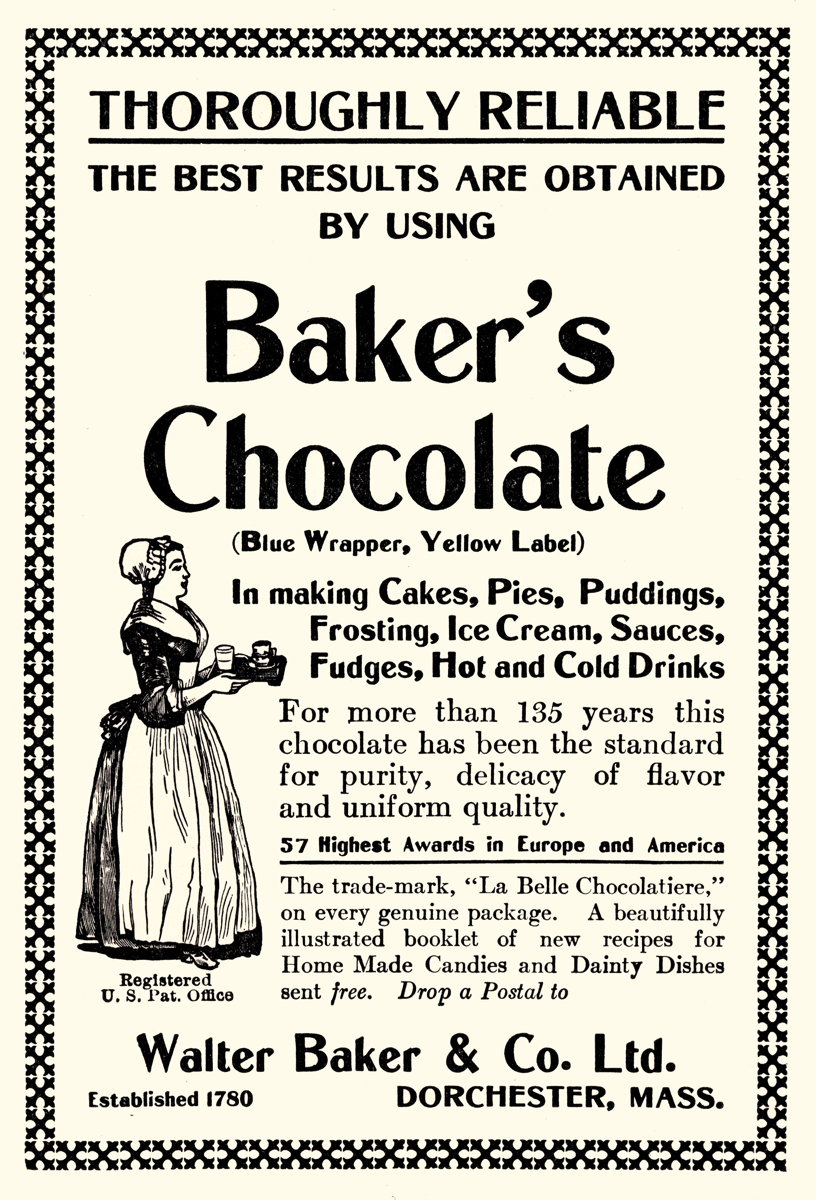
You can tell by the phrase “more than 135 years” that this ad was placed in 1916 or thereabouts. Walter Baker updated their ad copy every year.
While general searches can provide a lot of information about a cookbook, specialized newspaper and magazine archives will also be helpful. Many old periodicals aren’t indexed in general search engines. Check your local library to see if you have access to online newspaper and magazine archives. My library provides access to newspapers.com, so that’s what I use. The Internet Archive has many old magazines, such as Good Housekeeping, McCall’s Magazine, and The Ladies’ Home Journal. These are especially helpful for looking up old advertisements, in order to see product packaging or design1 and compare them to ads in the undated cookbook.
Advertising pamphlets regularly go through multiple printings and whether the year is included on a particular printing can seem completely random. This means that finding versions of a pamphlet on the Internet Archive can help you date that book even if your copy is not on the archive.
For example, The Quaker Oats Wholegrain Cookbook went through at least five printings. I have the fifth printing, listed as from 1979. The Internet Archive has two printings. One is labeled First Printing 1978 and the other has no printing number or year at all. That space on the back cover is blank. All three of the printings appear to be exactly the same other than that back cover line (or lack thereof).2
Why is there an undated version? Is the undated version at some point after the fifth printing when they decided they were never going to change it so why bother? Is it a zeroth printing, and the first printing is really a second printing? Or did they produce a printing after the first where they removed that line, and then added it back later?
The answer, of course, is “who knows?” But knowing that the first and fifth printings came out in 1978 and 1979 also means that the second through fourth printings came out in that range.

Mimsy Were the Borogoves
The green was the light the tree did not consume. — A. S. Byatt (Still Life•)