


- Garlic Dips and Sauces for Potatoes—Wednesday, August 19th, 2026
-
Today is National Potato Day. Why not have some potato chips or hash browns, and top them with one or both of these easy-to-make dips/sauces? They’re great on chips, on a baked potato, or in a potato salad—or with just about any vegetable or thick stew. I also like them on toasted bread, such as Eddie Doucette’s potato bread.
I’m winding down the Semiquincentennial posts, but if you’re not, consider Thomas Jefferson’s potato pie for this potato day as well.
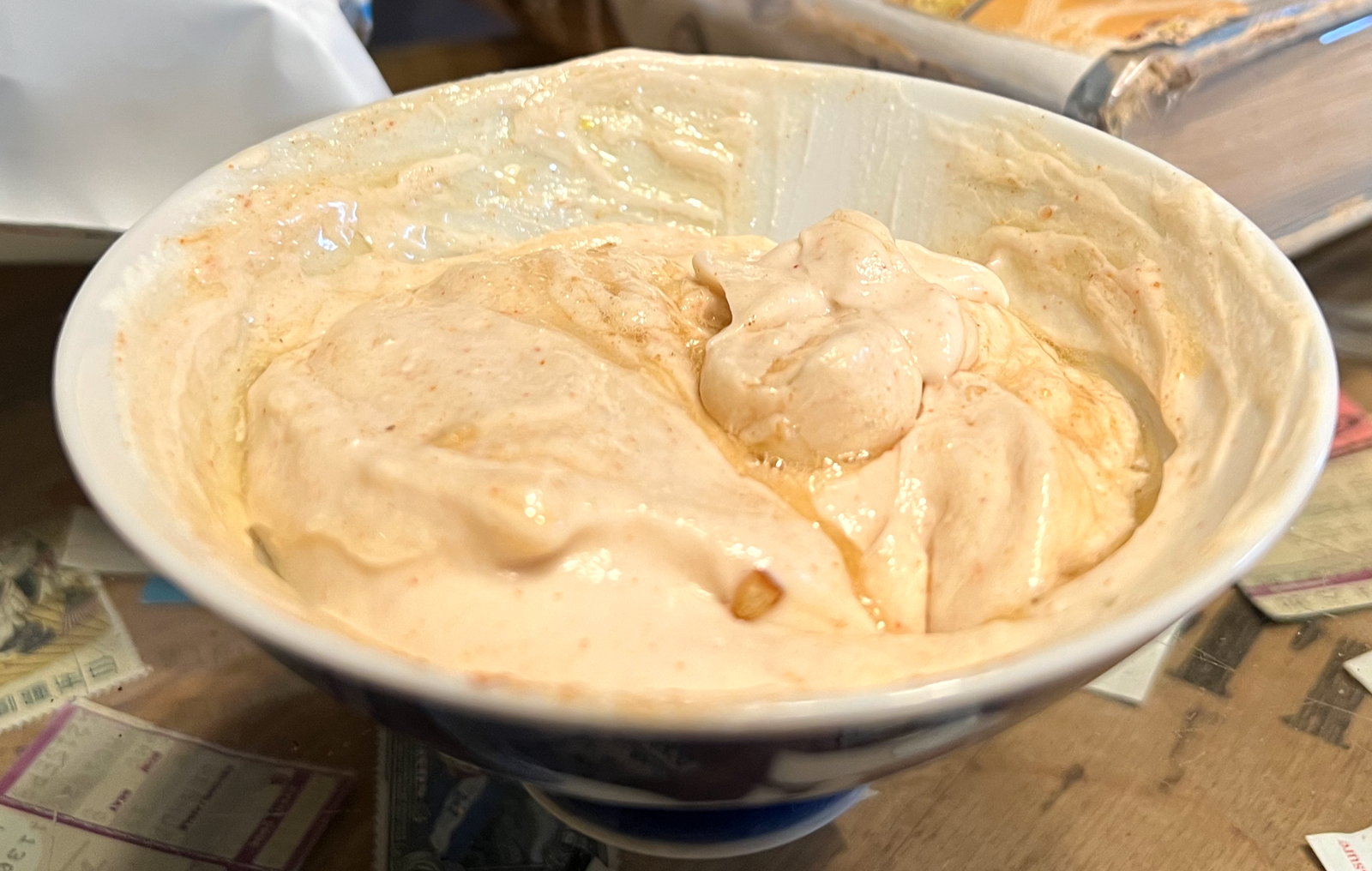
The Joy of Chips Dip
Servings: 8
Preparation Time: 10 minutes
Irma S. Rombauer
The Joy of Cooking (1943) (Internet Archive)Ingredients
- 8 oz yogurt
- 2 cloves garlic
- 2 tbsp butter
- ¼ tsp coarse salt
- ½ tsp smoked paprika
- 1 tbsp Worcestershire sauce
- 1-2 tbsp nutritional yeast (optional)
Steps
- Finely chop garlic.
- Fry garlic in hot butter over medium-low heat until golden brown.
- Pour into the yogurt and mix well.
- Add Worcestershire, paprika, yeast, and salt, mixing well each time.
Potato chips and chip dip are a lot like hot dogs and buns: there’s always one left when the other runs out. I’m the kind of person who runs out of dip long before I empty a bag of chips. What I need is a jar of endless dip! So I was overjoyed to find that Irma Rombauer’s chip dip in The Joy of Cooking isn’t just easily-made and easily-proratable but also very flavorful.
Work to a smooth paste:
Roquefort cheese or soft cream cheese
Season it with:
Worcestershire sauce
Paprika
Spread it on:
Crispy potato chips - The Rifleman at Bennington to the British Granadiers—Wednesday, August 12th, 2026
-
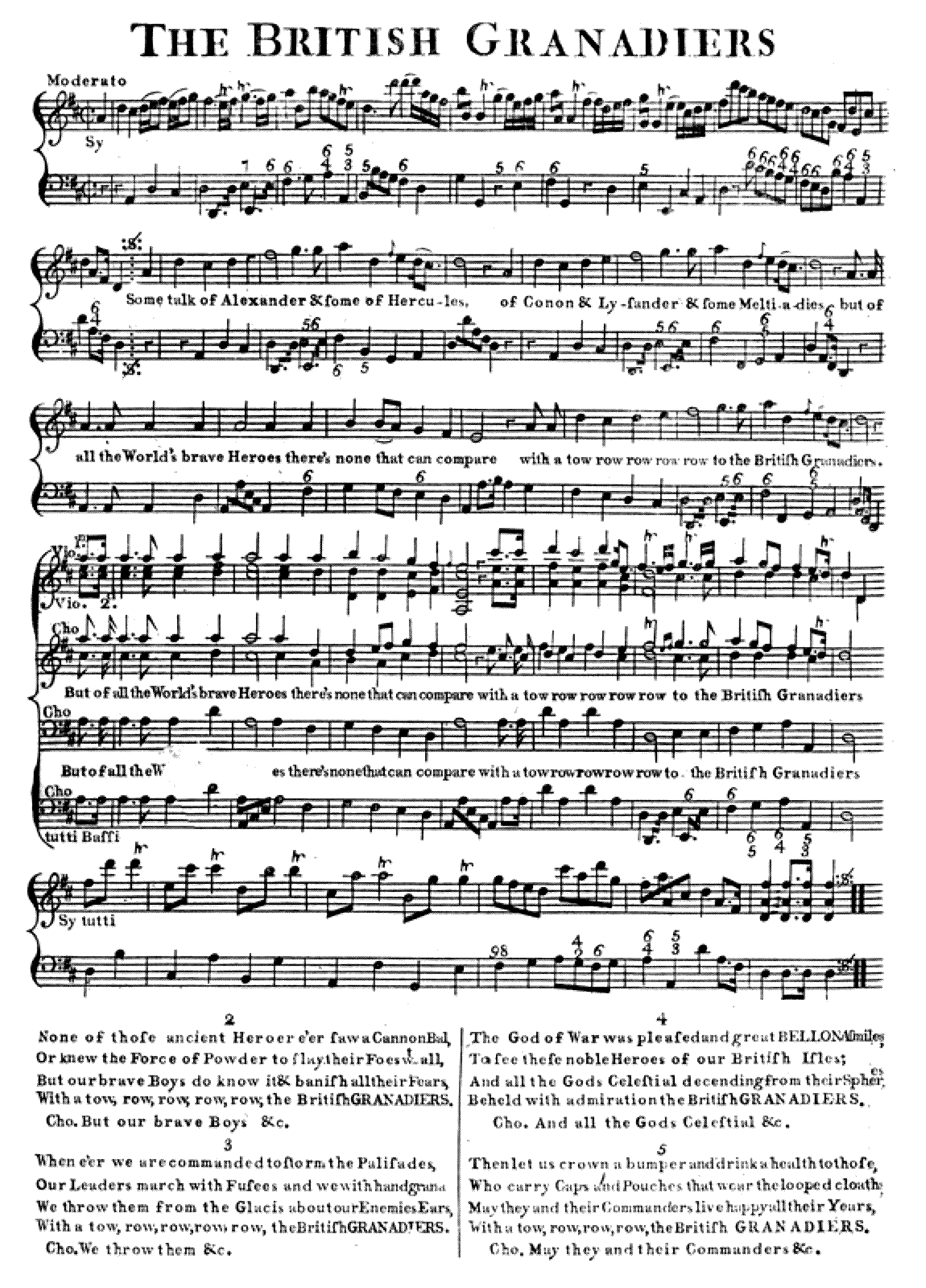
You can use this popular melody for The Rifleman’s Song at Bennington.
Sunday is the 199th anniversary of the 1777 Battle of Bennington. I marked the 198th last year, in the run-up to 2026, with Samuel B. Young’s 1819 commemoration speech. I first ran across the battle, however, unknowingly: from a song called “The Rifle” in Jerry Silverman’s How to Play the Guitar. It’s a rousing song and a striking demonstration of how Americans have always celebrated new technologies. And that’s what I meant to write about last year, before I discovered that the song was more commonly attributed to the Battle of Bennington.
So for me, at least, it’s fitting to bookend my Sestercentennial Year with Bennington, by finally getting a period melody down for this wonderful song. This is the end of the Sestercentennial celebrations on my blog, although not in my personal life.
This is also the official end of the Padgett Sunday Supper Club’s centennial-ish recipes. Some will continue throughout the year, and beyond. There are so many wonderful recipes in those centennial and bicentennial books, as well as in American Cookery and Thomas Jefferson’s Cook Book. But they’ll be there because they’re great recipes, not because they’re great centennial recipes.
Some of the founders were very much techies. I already wrote about how Jefferson incorporated technology into his kitchen. But one of the most relevant new technologies during the revolution was the rifle. Rifled barrels had much greater range than smoothbore muskets, at least twice—and up to three times—the range of older long guns. The rifle’s precision shooting was very suited to the tactics of America’s Indian-style wilderness fighters such as Francis Marion.
- Men Were Not Angels: Justice Thomas on the Declaration—Thursday, August 6th, 2026
-
“To commemorate the 250th anniversary of the signing of the Declaration of Independence, U.S. Supreme Court Justice Clarence Thomas delivered a special lecture at The University of Texas at Austin, followed by a moderated Q&A with questions from students.”
“I was proud to say that I was American by birth, and Georgian by the grace of God.”
Clarence Thomas delivered a wonderful hour-long lecture on the Declaration of Independence, touching on the Founders, Abraham Lincoln, Frederick Douglass, and Franklin Delano Roosevelt.
“When you lived in a segregated world with palpable discrimination and the governments nearest to you enforced laws and customs that promoted unequal treatment, it was obvious that your rights or your dignity did not come from those governments, but rather from God.”
Clarence Thomas: U.S. Supreme Court Justice Clarence Thomas Delivers Special Lecture at UT Austin (#)
- Buchanan Dam Salt Works and Granite Industry—Wednesday, August 5th, 2026
-
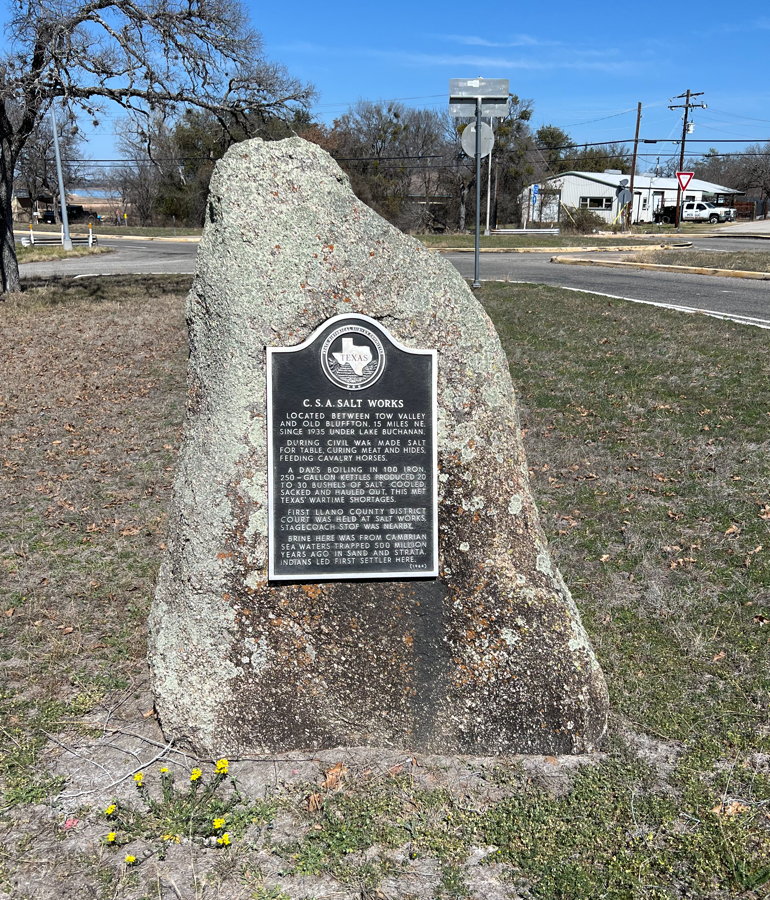
Is that stone from the granite quarry?
Further west from Liberty Hill on Texas State Highway 29, toward Buchanan Dam (and past the wonderful boudin kolaches at Gude’s Bakery), are the Confederate-era Salt Works and the later nineteenth-century granite quarries.
C.S.A. Salt Works
Located between Tow Valley and Old Bluffton, 15 miles NE, since 1935 under Lake Buchanan.
During the Civil War made salt for table, curing meat and hides, feeding cavalry horses.
A day’s boiling in 100 iron, 250-gallon kettles produced 20 to 30 bushels of salt. Cooled, sacked and hauled out, this met Texas’ wartime shortages.
First Llano County District Court was held at Salt Works. Stagecoach stop was nearby.
Brine here was from Cambrian Sea Waters trapped 500 million years ago in sand and strata. Indians led first settler here.
(1964)
If I’m reading this right, this marker is commemorating something we can’t see: the Salt Works has been under Lake Buchanan since Lake Buchanan was created in 1935 with the building of Buchanan Dam. If you look closely at the photo you can see the water in the distance.
Granite Industry in Llano County
Throughout Llano County, large granite outcrops exist. The first granite quarry in Llano County opened in 1888 on the Llano River. When the railroad arrived in 1892, the demand for granite rapidly increased. Italian Immigrant Vincenzo Fantozzi Petrick came to Llano County, established a quarry and provided stone for use in Texas’ coastal jetties. When Buchanan Dam was completed, men and materials were diverted to the war effort and work at Petrick’s quarry declined. Llano’s granite can be seen in the state capitol, the University of Texas at Austin, the Federal Building in Kansas City, Missouri, and in many monuments across Texas. Quarries owned by Petrick contributed to Llano County’s Success.
(2014)
- There Will Come Soft Rains—Tuesday, August 4th, 2026
-
“In the living room the voice-clock sang, Tick-tock, seven o’clock, time to get up, time to get up, seven o’clock! As if it were afraid that nobody would.”
A little something for your August 4 enjoyment. Bradbury wrote this in 1950 for Collier’s, and then included it again in The Martian Chronicles of the same year. The story begins on August 4, 2026, and ends on August 5.
For the 1997 edition of The Martian Chronicles, Bradbury chose to increase the timelines by 31 years, changing this story’s date from 2026 to 2057. This, despite Bradbury often saying that he was not a science fiction writer. Given the retro nature of technology in his stories even for the time, this made no sense. It only served to make the stories less compelling by making the technology outdated instead of fantastic.
Wonderful story, nonetheless.
Ray Bradbury: There Will Come Soft Rains (#)
- Steyn Online—Wednesday, July 29th, 2026
-
The best time to start reading Mark Steyn was twenty sod-bollicking years ago. The second best time to start reading Mark Steyn is right now.
The best in music, literature, current events, and civilizational collapse.
Follow link to Steyn Online (#)
- Google is wasting your ad money—Wednesday, July 29th, 2026
-

Google has come a long way from when I wrote my last post about Google and ads back in 2007. At that time Google had only recently acquired YouTube. Nearly twenty years on, I now watch a lot of YouTube videos. Three days a week I spend an hour and a half on the treadmill, watching nothing but videos on an Apple TV. I start with my YouTube watchlist and only move on to what I’ve recorded on my DVR after my watchlist is empty. Given all of the wonderful vintage cooking, history, and science shows on YouTube, this rarely happens.
I’ve been doing this now for over half a decade, which means that Google has massive amounts of information about what videos I watch, how I watch them, what ads I watch, what ads I skip, and when I skip them.
And yet they still can’t tell what I might be interested in, whether to buy or to learn more about. At best, they seem to be completely ignoring the very obvious data that they have on me. But more and more it seems as if they are deliberately showing me ads that they know I’m not going to watch—and that they know are going to convince me not to watch any subsequent ads in that ad block, too.
They know what videos I watch. They know I watch physics videos, space videos, vintage cooking videos, Apple videos, old movie videos, the making of movies, roleplaying games, unique firearms and medieval weapons, Italian news, history, music, vintage computers, and various combinations of the above.
You could probably sweep my very limited demographic by starting a channel focused on the history, food, and culture of the American west as depicted in spaghetti westerns. Especially if you made it on an iPhone and also talked about fiddly tech bits and illustrated your points with an old west roleplaying game managed by a TRS-80 Model I.
They have never seen me watch a video about dogs, cats, children, cleaning up messes, incontinence (it only now occurs to me to wonder if those two are related), or new cars.
They do, however, know that I often watch low-information-density videos—mainly videos by people who talk slowly—at +25% or even +50%. And yet they still show me ads that literally provide no information at all for the first five to ten seconds—or sometimes ever.
I have no idea what those ads are selling: I skip them when given the opportunity, and, when not given the opportunity, I turn my attention elsewhere.
- News on the Deaths of Adams and Jefferson—Wednesday, July 22nd, 2026
-
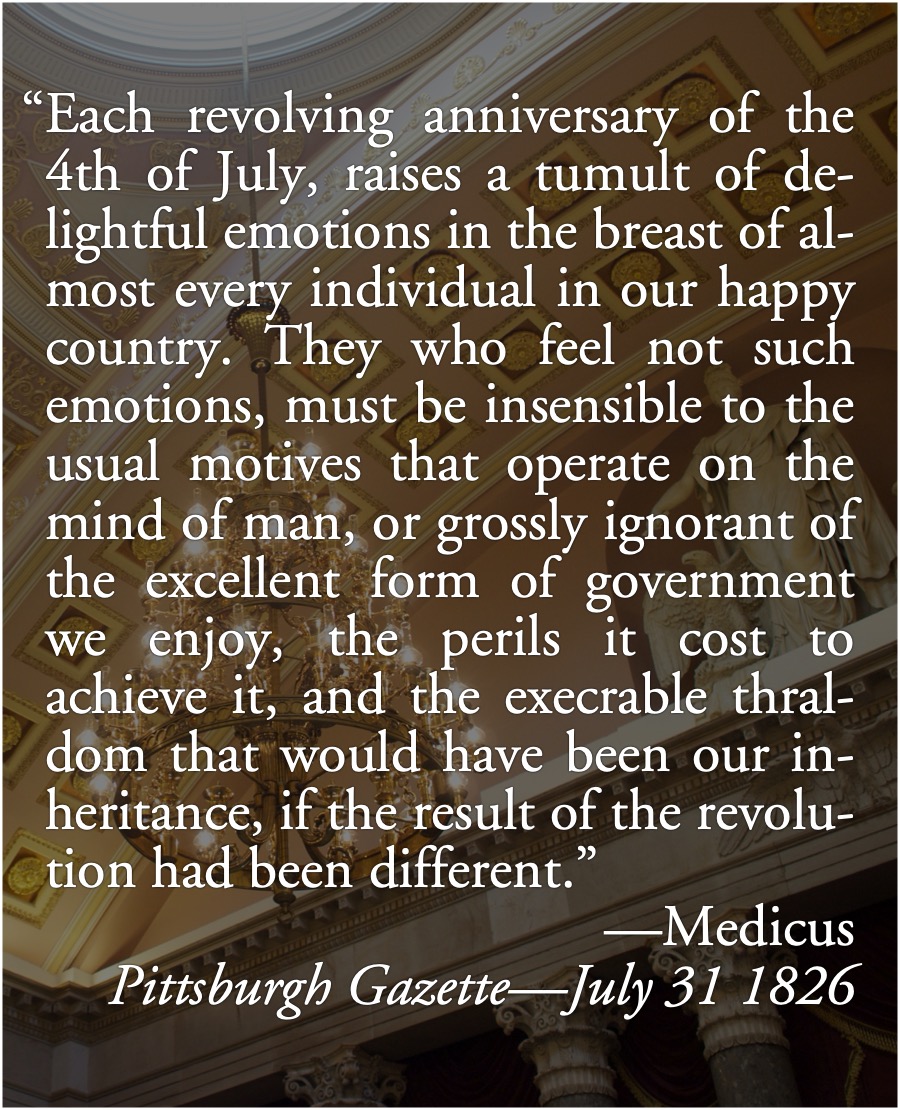
During the 2024 Presidential campaign, when President Trump survived an assassination attempt by no more than a glance at a computer screen for data, turning his head just enough to avoid a bullet to the brain, there was a lot of talk about Divine Providence. President Trump’s miraculous survival is not, however, the first time that the nation buzzed with the talk of Divine intervention in the lives of former presidents.

Mimsy Were the Borogoves
One can rely on a free society to create the moderate, but one cannot rely on a moderate to create a free society. — Natan Sharansky (The Case for Democracy•)